Walterboro, SC
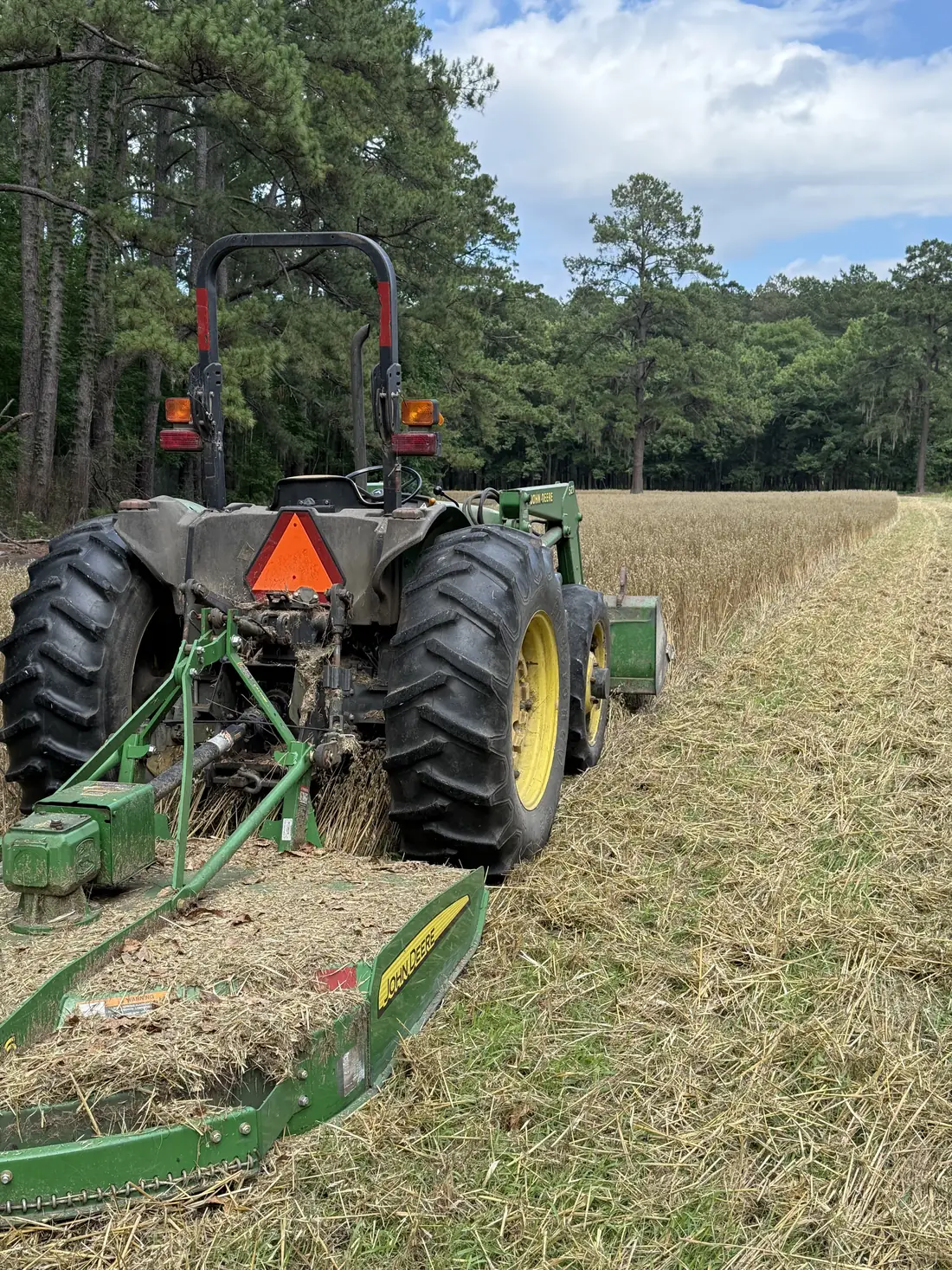
Bush hogging around Walterboro is field work in the truest sense. Colleton County still runs on open ground: the 2022 Census of Agriculture counts 575 farms on 167,546 acres here, with 3,196 acres in hay and forage and a cattle herd near 4,700 head. Most of those farms are small family places between 10 and 179 acres, and on Walterboro ground that size, one field skipping two cuttings starts the slide. Dog fennel and broomsedge come first, then blackberry, then sweetgum. The same census shows where the slide ends: 106,404 of the county's farm acres now sit in woodland.
We keep Walterboro-area ground on the right side of that line. The tractor and heavy rotary cutter handle the mowing, from horse pastures off the Hendersonville side to hay fields at Round O and club roads down toward Green Pond, and the tracked mulcher rides along for brush clearing where growth has gone past a mower. The full service is described on our bush hogging page, the county picture lives on our Walterboro land clearing page, and everything ACE Basin Forestry runs is family operated out of this same Basin. Estimates are free, written, and quoted from the field itself.
Tell us about your ground and we will get right back to you.
The growing season here barely stops. A Colleton field cut last June is chest high by this June, and the woody volunteers show up by the second skipped year. That pace is why the county's working land depends on a mowing rhythm: hay ground, the pastures carrying those 4,700 cattle and roughly 680 horses, field edges, pond banks, and the road frontage that tells the world a place is kept.
The economics run one direction. A field mowed once or twice a year cuts fast at the low end of the price range. A three-year field cuts slow and rough. A five-year field is not a mowing job anymore, and pretending otherwise just tears up a rotary cutter. A standing rotation, once or twice a year on the calendar, is the cheapest way to own open ground in this county.
The test is simple: stems you can snap by hand or fold underfoot are still hog work, no matter how tall the growth stands. Stems you would want loppers for have crossed into mulcher territory. Around Walterboro that crossover shows up on the back half of family land, on field corners nobody could reach wet, and on cutover edges where sweetgum found its opening.
Because both machines travel with us, a crossed-over field is a quote, not a problem. The mulcher grinds the woody edges and thickets, the hog takes the open middle, and a pasture reclamation prices each zone as what it actually is. One visit, and a field that was sliding toward woods goes back on the mowing rotation where it belongs.
Walterboro calls itself the front porch of the Lowcountry, and its 600-acre Wildlife Sanctuary east of I-95 exit 53 sits in the same Ashepoo, Combahee and Edisto country the hunting community here manages privately. Clubs and family tracts around Green Pond, Jacksonboro and Ritter run on mowed infrastructure: lanes you can drive in the dark, plot edges held in tender growth, perimeter runs that stay open all season.
That work is personal for us. Our family manages its own 327-acre tract in this Basin, and the late-summer mowing pass before deer season is a fixed ritual there, food plot edges included. Staging to Walterboro is quick off either interstate exit, and tracts on the wet side get scheduled around the ground instead of forced through it.
Free, no-obligation estimates across Walterboro and Colleton County.
(843) 696-7162From the first walk of the property to the final one, here is exactly how it goes.
We come out, walk the ground with you, and look at what is actually growing: brush density, stem sizes, wet spots, and anything you want protected or kept.
You get a free written estimate with a real timeline. We tell you exactly what the machine will leave behind, down to the finish on the ground, so there are no surprises.
The equipment shows up when we said it would. We clear to your flags, work selectively around keeper trees, and grind everything else into a clean mulch layer.
We walk the finished ground together. A finish pass evens out the mulch bed, and the job is done when you say it looks right, not when we drive away.
What Walterboro landowners ask us about bush hogging. Don't see yours? Give us a call.
Overgrown field, choked woods, fence row you cannot find anymore? Call or send the form and we will walk the property with you, talk through what the ground needs, and hand you a free written estimate.
Tell us about your ground and we will get right back to you.