Cottageville, SC
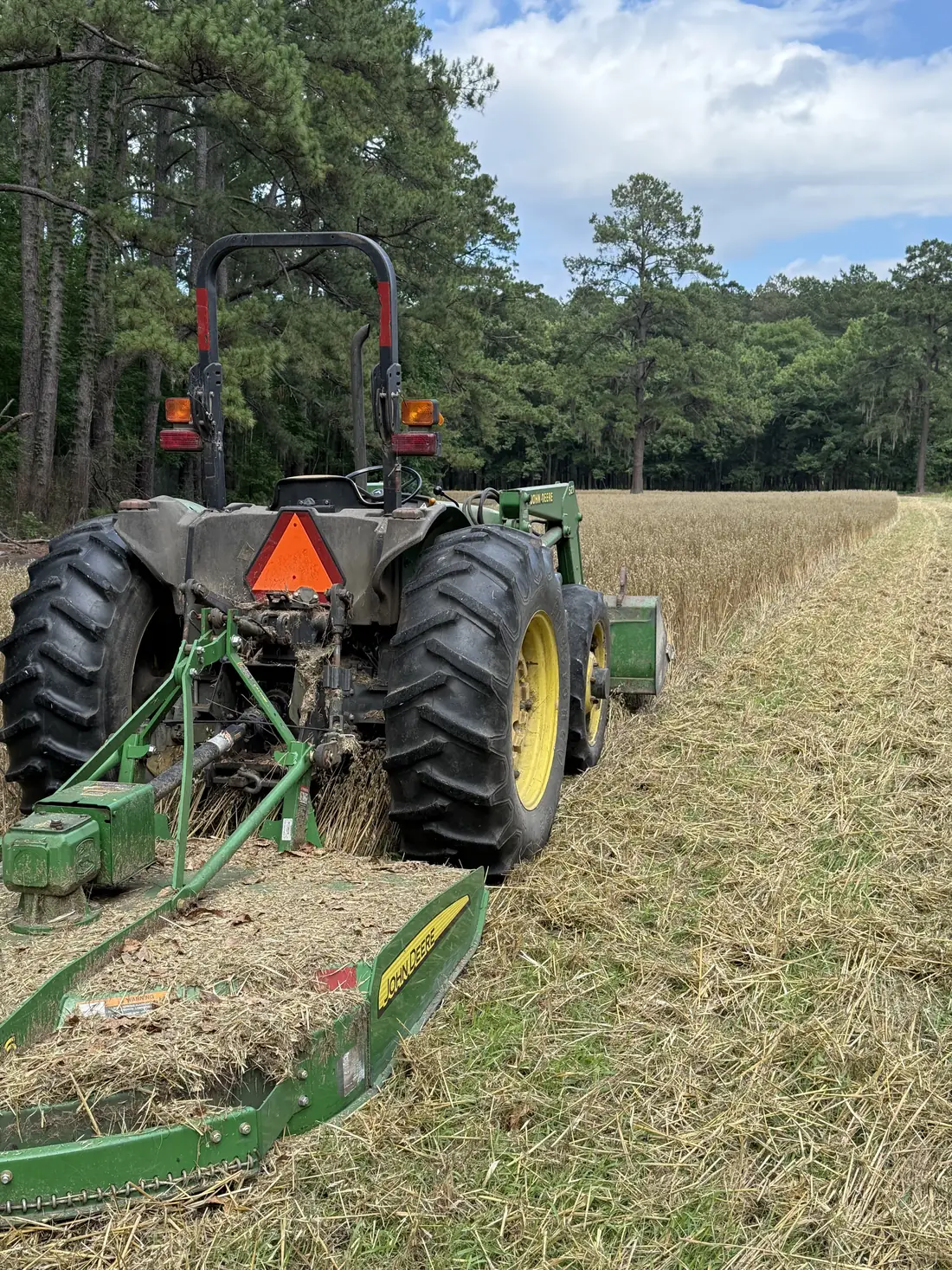
Bush hogging around Cottageville is about keeping small farms small farms. The 2022 Census of Agriculture counts 5,405 acres of pasture and 3,196 acres of hay and forage in Colleton County. That ground carries about 4,700 cattle, 680 horses and 540 goats. Most of it sits on family places, and a lot of those places are on the 17-A corridor around Cottageville. A pasture here grows year round. Skip a cutting and dog fennel moves in. Skip a year and the sweetgum does. The rotary cutter keeps that from happening, at a fraction of what clearing the field later costs.
We run that cutter across upper Colleton on a schedule. The tractor mows hay ground, horse pasture, fence lines and farm lanes from Round O to Cross Swamp. The tracked mulcher rides along for any edge that has gone woody. What the service covers is on our bush hogging service page, and the rest of the town's work is on the Cottageville service area page. ACE Basin Forestry stages the whole outfit from the next county over. Every estimate is free and in writing.
Tell us about your ground and we will get right back to you.
Colleton farms are small by acreage. The census puts the county average at 291 acres, but most operations run between 10 and 179. Many Cottageville places are smaller still: a house, a barn, a pasture and a back lot. Ground like that does not have a full-time tractor. It gets mowed when someone has a weekend, and the weekends run out in a wet summer.
A standing rotation fixes that. Once or twice a year on the calendar, the tractor comes through and the field stays a field. Skipping years is what turns cheap mowing into a reclamation job. Two idle seasons bring woody stems the cutter can still take. Five bring a thicket the mulcher has to grind first. Cottageville's cheapest acre is the one that never gets the chance to grow up.
Timing matters more than most people expect. SCDNR puts bobwhite nesting in South Carolina anywhere from April through September. Peak breeding runs mid-June to the end of July, and wild turkeys use the same old-field edges to nest. Hay fields and horse pasture get mowed on their own schedule regardless. Field borders, ditch banks and hunt-tract edges can wait. A late-summer pass lets the broods get off the ground first. The edges still green back tender before deer season opens on August 15.
SCDNR's own habitat report warns about what it calls recreational mowing, the urge to clean up every weedy corner because it looks untidy. One landowner in that report counted five quail broods after leaving his bush hog parked for a summer. We are glad to mow every acre you want mowed. We will also point out which edges are worth leaving a season. The calendar then puts the hay, the pasture and the wildlife corners each on their own cut date.
Cottageville fence lines hide the county's oldest wire. Long-held Colleton places have fence runs rebuilt over decades. The old strand is usually still out there in the broomsedge. We look for it before the cutter finds it. Then both sides get mowed to the wire, so the fence can be seen and fixed. Farm lanes and road frontage get the same pass. The front of a place is what tells the road it is kept.
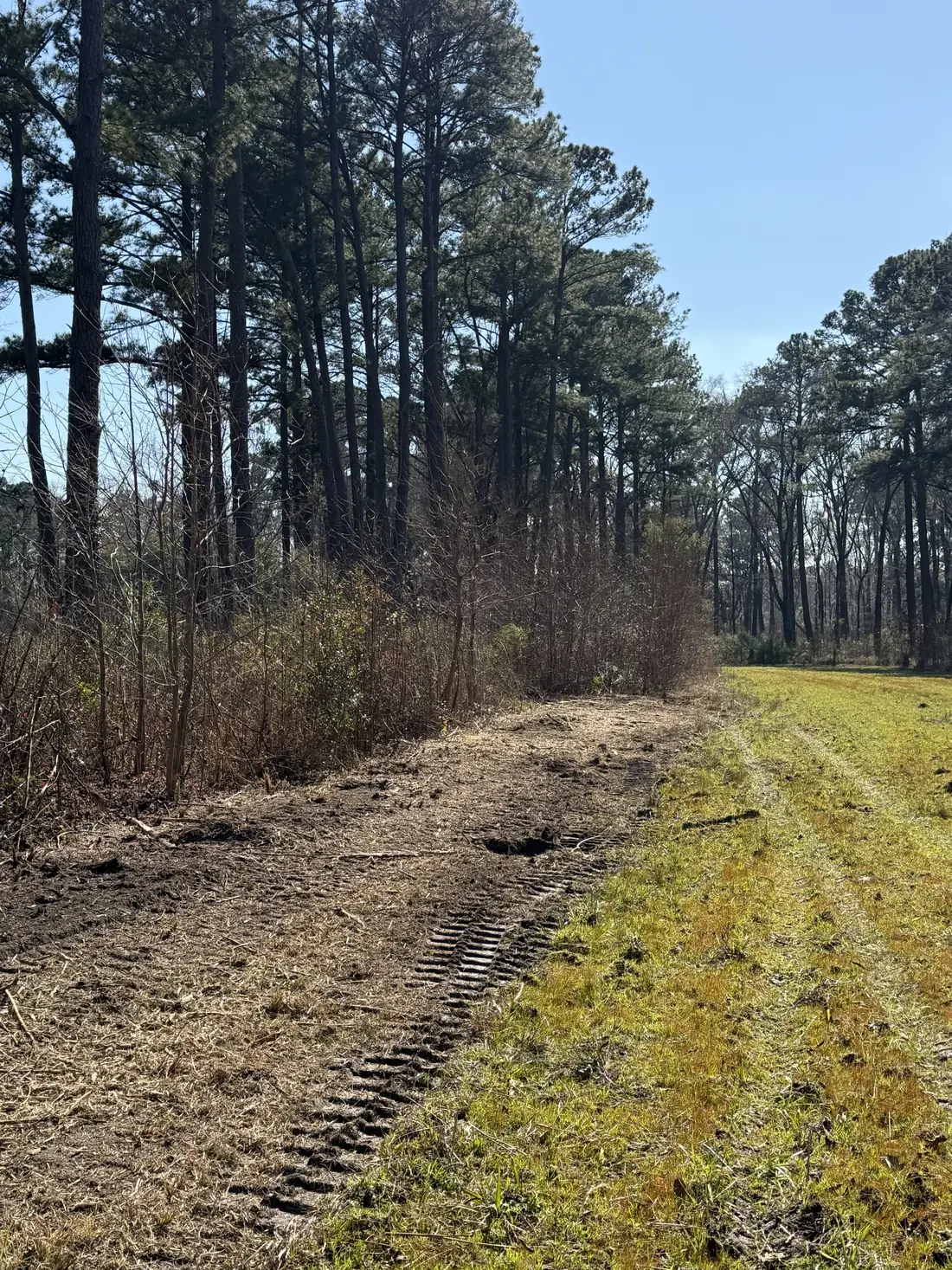
Toward Cross Swamp and the Edisto bottoms the ground softens. A heavy tractor in a wet field does damage that lasts years. Those corners get scheduled for the dry months instead of forced. Growth that has gone from weeds to lopper-sized stems leaves the tractor behind. That ground goes to mulching work instead. Both machines come to the estimate, so every acre gets priced as the job it actually is.
Free, no-obligation estimates across Cottageville and Colleton County.
(843) 696-7162From the first walk of the property to the final one, here is exactly how it goes.
We come out, walk the ground with you, and look at what is actually growing: brush density, stem sizes, wet spots, and anything you want protected or kept.
You get a free written estimate with a real timeline. We tell you exactly what the machine will leave behind, down to the finish on the ground, so there are no surprises.
The equipment shows up when we said it would. We clear to your flags, work selectively around keeper trees, and grind everything else into a clean mulch layer.
We walk the finished ground together. A finish pass evens out the mulch bed, and the job is done when you say it looks right, not when we drive away.
What Cottageville landowners ask us about bush hogging. Don't see yours? Give us a call.
Overgrown field, choked woods, fence row you cannot find anymore? Call or send the form and we will walk the property with you, talk through what the ground needs, and hand you a free written estimate.
Tell us about your ground and we will get right back to you.