Do You Need a Burn Permit in South Carolina?
South Carolina doesn’t issue burn permits. Outside town and city limits, state law requires you to notify the Forestry Commission before you burn. Inside town and city limits, the state notification law does not apply, and local rules decide.
Each rule below links to its government source. It is general information, not legal advice.
Is there a burn permit in South Carolina?
No. The Forestry Commission’s FAQ says South Carolina doesn’t issue burning permits. The law asks for a notification instead.
Under S.C. Code Section 48-35-10, proper notification goes to the State Forester first. That covers fires in or next to woodlands, brushlands, grasslands, ditchbanks or hedgerows. The rule applies in the unincorporated parts of every county, from Charleston and Berkeley to Colleton and Jasper.
The Commission’s fire and burning page says 98 percent of all wildfires are caused by humans. About half of those come from escaped debris burns.
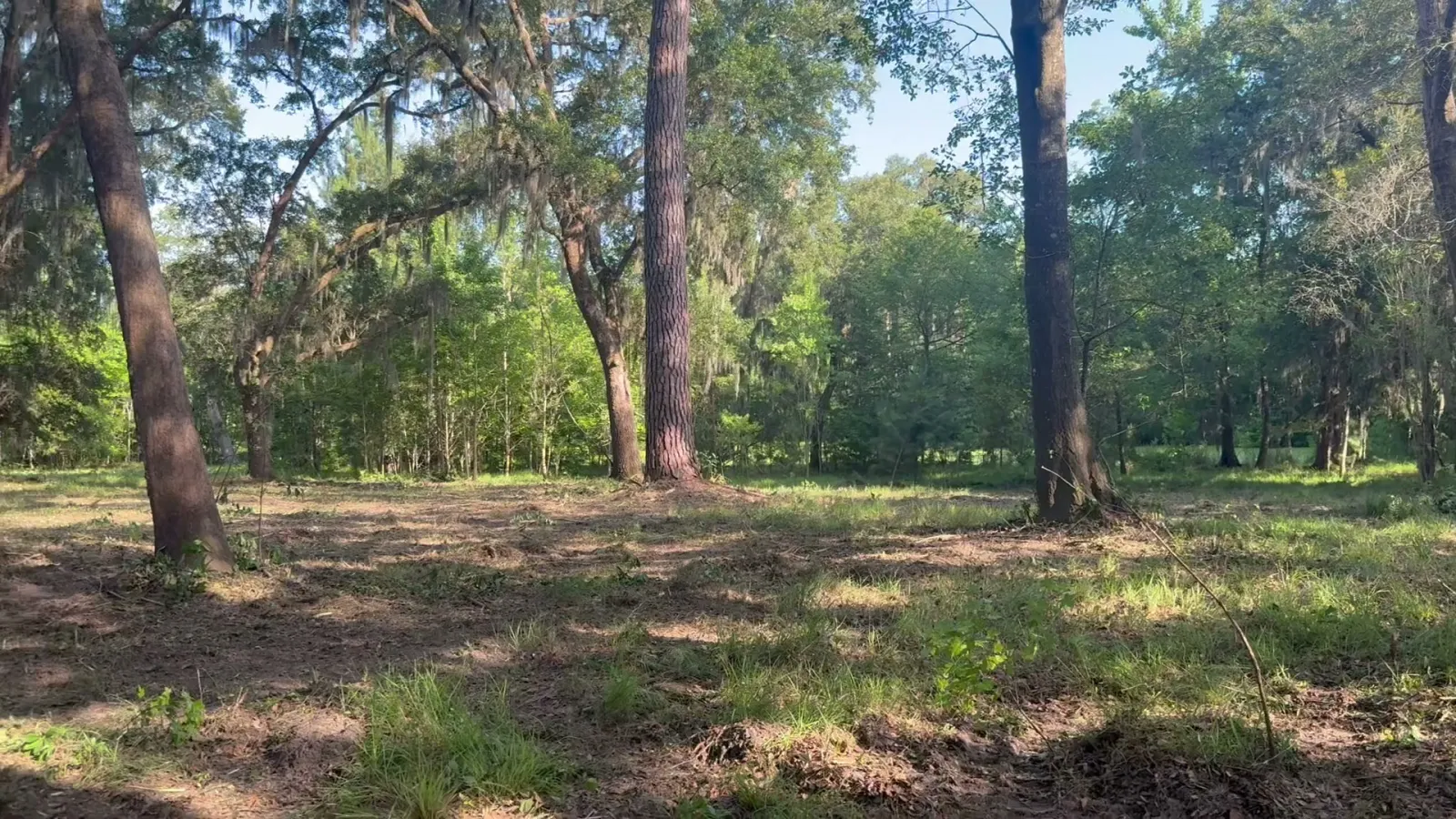
Sometimes the brush pile is the real problem. Our brush clearing mulches brush, saplings and vines where they stand. The chips stay on the ground, so there is no pile to burn and nothing to notify.
Does the state notification law apply inside city limits?
No. Section 48-35-30 says the chapter does not apply to fires started within the corporate limits of any town or city. The Commission adds that certain city ordinances may regulate the burning instead.
North Charleston shows how that works. Its city code’s open burning ordinance says open burning is prohibited except as the ordinance provides. Its exceptions cover cooking and recreational fires in devices built for them, firefighter training and a few other uses. Inside a town, check with the town or its fire department before you burn.
What are the three kinds of burn notification?
The Forestry Commission takes notifications for three kinds of outdoor burns. They are yard debris, prescribed and land clearing burns.
For yard debris, notify online at scfc.gov/notify with your county, address, name and contact information. You can also call your county’s toll-free burn notification number.
Prescribed burns are larger-scale burns for agriculture, wildlife and forestry purposes. They must comply with South Carolina’s Smoke Management Guidelines. To notify, call (800) 777-3473 and speak to a dispatcher.
A land clearing or right-of-way burn next to woods, brush or grassland needs a notification before burning. That call goes to the toll-free number for the county where the burn will take place.
| Burn type | Who notifies | How | Main conditions |
|---|---|---|---|
| Yard debris burn | The person burning, outside town and city limits | Online at scfc.gov/notify, or the toll-free number for your county | Leaves, limbs and branches from the home’s own premises; a cleared firebreak; equipment on hand; stay until the fire is completely safe |
| Land clearing burn | The person burning, when the site is next to woods, brush or grassland | The toll-free number for the county where the burn takes place | Areas that are not mainly residential; 1,000 feet from public roads and from homes and businesses off the property; onsite plant growth only; start 9:00 a.m. to 3:00 p.m.; no more than two 30 by 30 foot piles per six acres at one time |
| Prescribed burn | The person in charge of the burn | Call (800) 777-3473 and speak to a dispatcher | Forestry, wildlife or agricultural purposes; must comply with South Carolina’s Smoke Management Guidelines |
What does the law require when you burn yard debris?
Regulation 61-62.2 prohibits open burning except for listed exceptions. Exception A covers leaves, tree branches or yard trimmings from a private residence, burned on those same premises.
The Commission says people burning yard debris must limit the fire to leaves, limbs, branches and other vegetative material. They must clear a firebreak, have the right equipment available and stay with the fire until it is completely safe.
Section 48-35-10 says much the same. It requires a cleared area around the burn and enough equipment and personnel on hand to secure the fire. The person who starts the fire must supervise it and have it under control before leaving.
Notifying does not protect you if the fire gets away. The Commission’s FAQ says it is against the law to allow a fire to escape. You may also be held responsible for damages.
What are the rules for a land clearing burn?
Exception E of Regulation 61-62.2 covers land clearing and right-of-way burns in areas that are not mainly residential. It holds only if these minimum conditions are followed:
- The burn is at least 1,000 feet from public roadways and from homes, businesses and industrial sites off the property.
- Winds blow away from any public roadway, home, business or industrial site the smoke may affect.
- The material is generated onsite, not moved in from another location.
- The amount of dirt on the material is minimized.
- Only plant growth is burned, with no heavy oils, asphaltic materials or rubber items.
- The fire starts only between 9:00 a.m. and 3:00 p.m. Nothing is added between 3:00 p.m. and 9:00 a.m. the next day.
- No more than two 30 by 30 foot piles, or the equivalent, burn within a six-acre area at one time.
- For land clearing, all salvageable timber and pulpwood is removed first.
The Commission asks callers to understand these requirements before calling to notify. Its dispatchers are not authorized to interpret this regulation. Questions go to the nearest office of the SC Department of Environmental Services.
Clearing land can raise permit questions beyond burning. Our Lowcountry land clearing permit guide covers the stormwater and coastal side.
How do burn bans and Red Flag Fire Alerts work?
The Forestry Commission’s FAQ calls a Red Flag Fire Alert a wildfire danger warning. An alert does not prohibit outdoor burning, as long as all other state and local regulations are followed. The Commission asks people to voluntarily postpone any outdoor burning until it lifts the alert.
An alert can still change local rules. The Commission’s statewide alert notice of March 24, 2026 said alerts trigger certain county or local ordinances. Those ordinances restrict outdoor fires, so the notice told residents to check with their local fire departments.
A Burning Ban legally prohibits outdoor burning, the FAQ says. Bans are emergency measures, declared only when outdoor burning is deemed a significant threat to public safety. Section 48-35-50 lets the State Forester prohibit all open burning. Under Section 48-35-40, no burning may take place during a forest fire emergency declared by the Governor.
On March 27, 2026, the Commission issued a State Forester’s Burning Ban for all counties. It prohibited all outdoor burning in unincorporated areas, including yard debris burning, prescribed burning and campfires. Cooking fires and fires in appropriate enclosures, such as chimineas and permanent fire pits, were exempt.
The Commission announces alerts and bans in news releases. A ban lasts until the Commission officially announces its end. Alerts and bans change with the weather, so check scfc.gov on the day you plan to burn.
Which fires are exempt, and who needs the landowner’s OK?
Section 48-35-55 exempts a fire used to prepare food for immediate consumption. It also exempts fires in portable outdoor fireplaces, chimineas and noncombustible permanent fire pits that meet state fire codes. The area around the fire still has to be cleared, with enough equipment and personnel on hand to secure it.
Section 48-35-20 requires a lessee or any other person to get the landowner’s prior authorization to burn. A hunting club on a lease is one common example.
What are the penalties for breaking the burning law?
Section 48-35-60 says a person who violates the chapter may be found guilty of a misdemeanor. A first offense can bring a fine of up to $200 or up to 30 days of imprisonment.
Penalties go up for a second or later offense within ten years. That offense can bring a fine of at least $500, up to 60 days of imprisonment, or both.
What if you would rather skip the burn pile?
Mulching takes the burn pile out of the job. Our land clearing and forestry mulching work grinds brush, saplings and vines into chips where they grow.
Thick growth goes through the forestry mulching head on our Kubota SVL compact track loader. The chips stay on the ground as cover, and the trees you want to keep stay standing. Our family mulches the understory on its own 327-acre tract in the ACE Basin near Yemassee every year.
We cover Charleston, Summerville, Walterboro, Beaufort and the rest of the Lowcountry. For pricing, see our brush clearing cost guide. Call (843) 696-7162 for a free estimate.