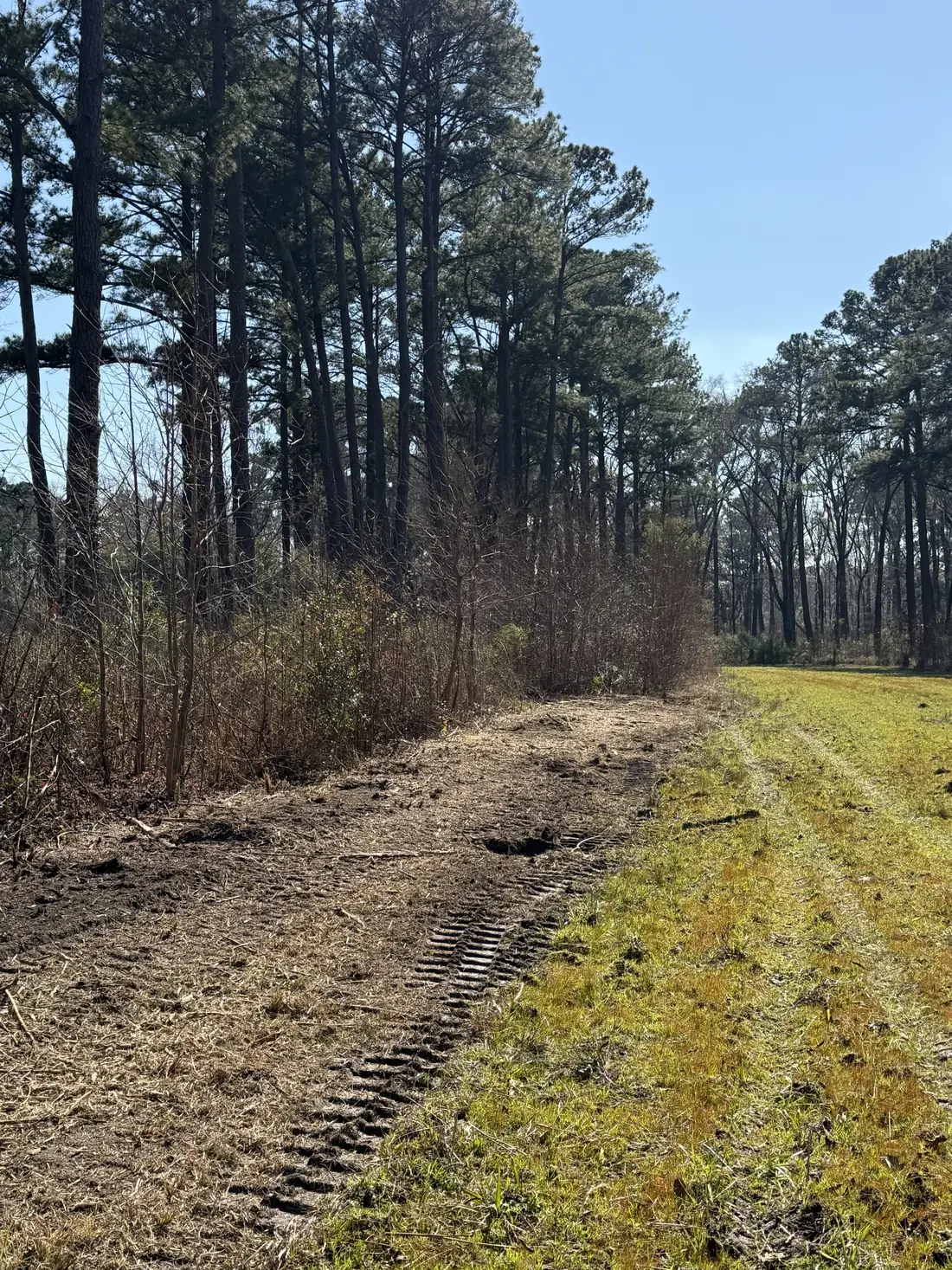
How much does brush clearing cost per acre in South Carolina?
LawnStarter puts brush removal at $20 to $200 per acre. Brush thick enough to need a forestry mulcher costs more. Our forestry mulching cost guide puts typical mulching work at $600 to $2,500 per acre.
How thick the growth is decides where your acres land. Every range in this post is a published market figure, and each one names the publisher behind it.
What does brush clearing cost per acre?
Per acre is the first number most people ask for. It works best when the brush is fairly even across the ground.
LawnStarter’s land clearing guide puts brush removal at $20 to $200 per acre. Farm surveys land in the same place. Iowa State University Extension’s 2026 survey put chopping brush at $25 to $200 per acre, averaging $105.55.
Ranges that low fit growth a tractor and rotary cutter can still chop. Thickets of wax myrtle, sweetgum saplings, privet and smilax are a different job. They usually need a forestry mulcher, and our forestry mulching cost guide breaks down those prices by density.
For brush clearing in the Lowcountry, we bring whichever machine fits the growth. The tractor and brush hog take the light stuff. The forestry mulching head on our Kubota SVL compact track loader takes the thickets.
Run the math on a 3 acre overgrown lot. At LawnStarter’s range, light brush comes to $60 to $600. At the mulching guide’s range, brush that needs the mulcher comes to $1,800 to $7,500.
Open fields that only need mowing have their own numbers in our bush hogging cost guide. Opening a whole wooded parcel is a bigger job, covered in what land clearing costs in the Lowcountry.
How do the published brush clearing rates compare?
The table puts every published figure from this post side by side. Each row names its publisher, so you can check the number at the source.
| How it is priced | Published range | Publisher | What the range covers |
|---|---|---|---|
| Per acre | $20 to $200 | LawnStarter | Brush removal |
| Per acre | $25 to $200, average $105.55 | Iowa State University Extension, 2026 survey | Chopping brush |
| Per acre | $600 to $2,500 | Our forestry mulching cost guide | Typical forestry mulching |
| Per hour | $110 to $250 | Fixr | Land clearing services |
| Per hour | $150 to $250 | LawnStarter | Forestry mulching |
| Per hour | $100 to $225, average $161.65 | Iowa State University Extension, 2026 survey | Clearing land, labor and fuel included |
| Per day | $1,500 to $3,000 | Our forestry mulching cost guide | Machine day rate |
| Per job | $200 to $1,250 | Fixr | One overgrown fence line |
Match the row to your growth before you match it to your budget. The first two rows fit brush a rotary cutter can still chop. The mulching rows fit thickets and saplings, which take slower, heavier work.
Should you pay per acre, per hour or per day?
Per acre pricing works when the brush is even and easy to judge. You can compare two quotes on one number. The price also holds if the work runs long.
Hourly pricing fits ground nobody can fully see yet. Fixr puts land clearing services at $110 to $250 per hour. LawnStarter puts forestry mulching at $150 to $250 per hour.
Farm surveys come in close to those numbers. Iowa State’s 2026 survey put clearing land at $100 to $225 per hour, averaging $161.65. The survey rates include labor and fuel along with the equipment.
Day rates suit bigger tracts and mixed ground. Our forestry mulching cost guide puts machine day rates at $1,500 to $3,000. A day rate lets you clear the worst thicket first and save the rest for later.
Edge work often prices as one job. Fixr puts clearing an overgrown fence line at $200 to $1,250. Small jobs usually carry a minimum, because trailering a machine costs the same for a corner as for a tract.
What moves the price on Lowcountry brush?
Density moves the number most. Knee high briars fall fast under a brush hog. A solid wall of wax myrtle means slow, heavy grinding with the mulcher.
Stem size picks the machine. Thumb thick sprouts in open ground are bush hogging work, which keeps the cost down. Saplings past that size go to the mulcher, and the price climbs with them.
Access comes next. Locked gates, deep ditches, old fences and tight gaps between trees all slow a machine down. A thicket behind a pond takes longer to reach than brush along a driveway.
Wet ground is a big factor in the Lowcountry. Our compact track loader spreads its weight on tracks, which helps on soft ground. True bottoms still wait for a dry spell, and planning around the water keeps the job on schedule.
Keeper trees add care. Cutting close around every oak and pine you want to save takes more time than clearing everything. Point them out at the estimate so the price accounts for them.
The age of the growth counts too. Brush cut a year or two ago comes back soft and quick to clear. Ground left alone for many years has had time to turn into saplings.
Is mulching in place cheaper than cutting and hauling?
Mulching in place is one step. The forestry mulching head cuts the brush and grinds it into chips in the same pass. The chips stay on your ground as cover.
Cutting and hauling is two jobs. First the brush gets cut, then it gets trucked off and dumped. Truck time and dump fees ride on top of the cutting, so the same acre tends to cost more.
The chip layer keeps working after the job. It covers bare soil and helps hold it through a hard Lowcountry rain. It also shades the ground, which slows the first flush of regrowth.
How fast does Lowcountry brush grow back?
Faster than most people expect. The roots stay in the ground, and our growing season is long and wet. Wax myrtle, sweetgum, privet and smilax all sprout again from what is left below ground.
Left alone, cleared ground can close back in within a few seasons. A lighter pass every year or two keeps it open. Young regrowth is soft, so the follow up pass often fits the low end of the table.
Our family mulches the understory on our own 327-acre tract in the ACE Basin, near Yemassee, every year. That yearly pass is how the ground stays open.
What should a brush clearing quote spell out?
A good quote names the ground it covers and the machine it plans to use. Ask each bidder to mark the area with flags or on a map. Ask which trees stay, and how close the machine will cut around them.
Ask about the finish too. Mulch left on the ground is the normal result of mulching in place. If you want some spots raked thinner, say so at the estimate, because that takes extra time.
How do you get a real number for your brush?
Call (843) 696-7162 and tell us where the brush has taken over. We come out to look over the growth with you and mark the trees that stay. The estimate is free.
We work Charleston, Summerville, Walterboro, Beaufort and the rest of the South Carolina Lowcountry. When we finish, the brush is mulched or mowed where it stood, and your keeper trees are still standing.