How much does a food plot cost per acre in South Carolina?
The National Deer Association puts the cost of establishing a food plot at an average of about $325 an acre. That average covers lime, fertilizer, seed and herbicide, before equipment, fuel or labor. Opening the ground is the biggest swing on top of it, and it depends on what grows there now.
Each dollar figure below comes from a published source, and the sentence names who published it. Use them to set a budget before anyone prices your ground.
What goes into a food plot’s cost per acre?
Food plot cost per acre comes down to five parts. The soil test comes first, then lime and fertilizer, then seed. The planting passes follow, and most new plots also need the ground opened.
The National Deer Association average covers the inputs only. It comes from a 2023 NDA analysis of warm-season plots.
A state wildlife agency lands in a similar place. The Virginia Department of Wildlife Resources says costs can easily exceed $250 per acre. Its list counts site preparation, liming and fertilizing, seed, planting, maintenance and equipment rental.
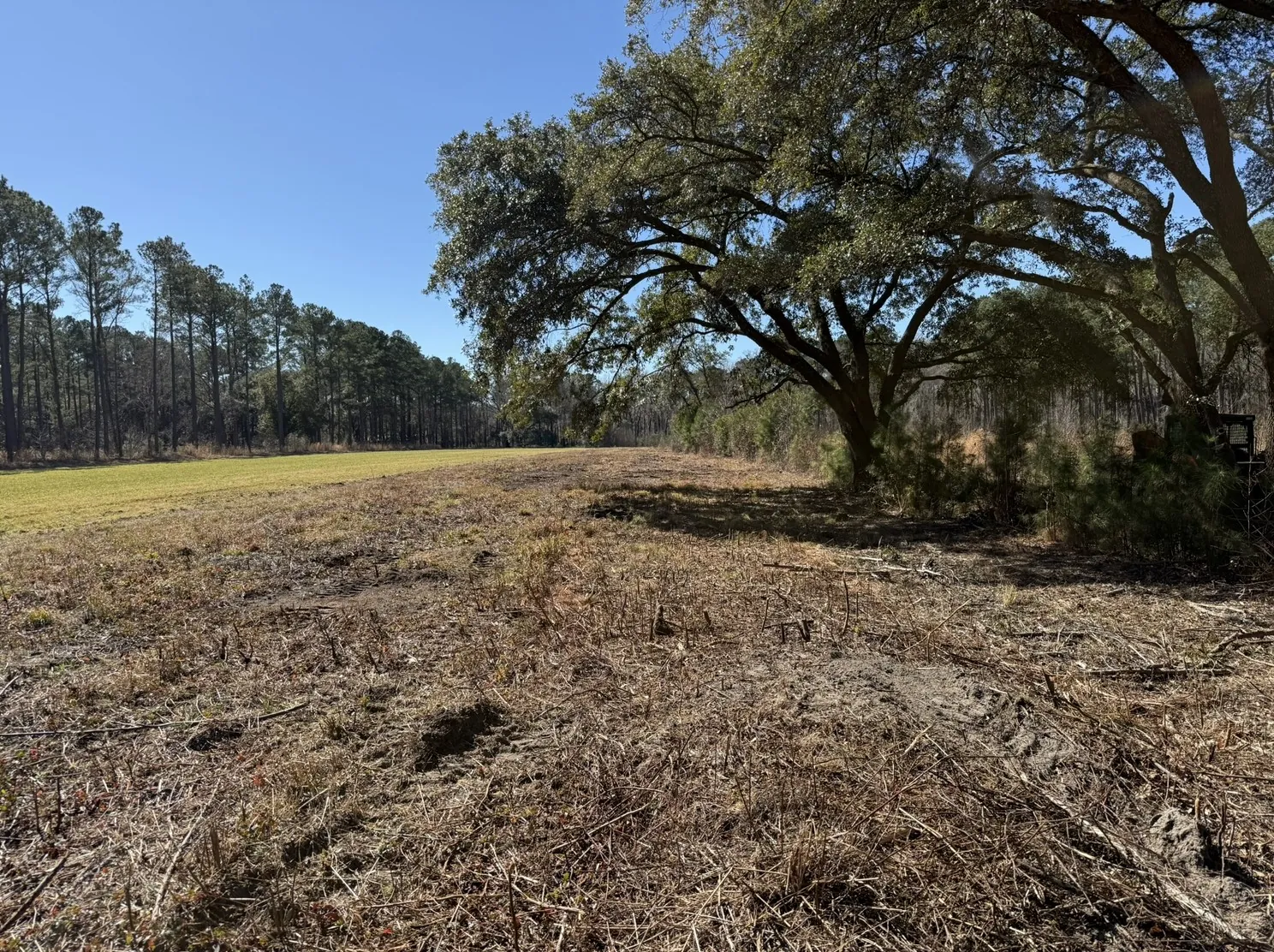
For food plot establishment in the Lowcountry, we can take a plot from standing brush to seed in the ground. Our Kubota SVL with its forestry mulching head clears the spot. The tractor and no-till drill plant it. We plant and hunt our own food plots on our family’s 327-acre tract in the ACE Basin, near Yemassee.
How much do the soil test and lime add?
The soil test is the smallest line on the bill. Clemson’s Agricultural Service Laboratory runs a standard soil test for $6 per sample. Clemson Extension describes a plot sample made of 10 to 20 soil cores. You can turn it in at your local Clemson Extension office.
The results set your lime and fertilizer rates. Clemson Extension says many soils in the Coastal Plains region of South Carolina are naturally acidic. A separate Clemson Extension guide says food plot plants like a soil pH of 6.0 to 6.5. Clemson calls proper use of lime the most critical management practice in food plot production.
Lime works slowly. Clemson Extension says it can take three to six months to raise soil pH. Count back from the fall planting windows for South Carolina, and spring is the time to test and lime.
Lime has published costs, too. Mississippi State University Extension’s 2024 custom rate survey put a lime application at $14 to $30 an acre. MSU’s line averaged $22.00 across two responses. The same MSU table lists $65.00 an acre from the university’s 2024 planning budgets, with the lime included.
Fertilizer follows the soil test, so the blend and rate change from plot to plot. MSU’s survey put a dry fertilizer application at $6.50 to $15.00 an acre, averaging $9.00. Mississippi State also warns that planting food plots without proper liming and fertilization wastes time and money.
What does food plot seed cost per acre?
Seed is the easiest line to price ahead of time. Mississippi State University Extension Publication 3604 prices nine common deer forages per acre. Its seed prices are averages from 10 different seed retailers across Mississippi.
The last column divides each seed cost by the forage that planting grew in MSU’s variety trials. It shows the seed cost behind every 1,000 pounds of deer forage.
| Forage | Planting rate (pure live seed) | Seed sown per acre | Seed cost per acre | Seed cost per 1,000 lb of forage |
|---|---|---|---|---|
| Wheat | 125 lb | 150 lb | $37.50 | $22.50 |
| Oats | 125 lb | 150 lb | $64.50 | $37.76 |
| Cereal rye | 125 lb | 150 lb | $64.50 | $31.46 |
| Crimson clover | 25 lb | 63 lb | $87.57 | $43.18 |
| Balansa clover | 8 lb | 19 lb | $48.83 | $21.80 |
| Berseem clover | 20 lb | 39 lb | $139.23 | $63.72 |
| Red clover | 15 lb | 35 lb | $63.35 | $13.14 |
| Durana white clover | 8 lb | 15.5 lb | $101.37 | $29.81 |
| Ladino white clover | 8 lb | 21 lb | $72.87 | $20.87 |
Source: Mississippi State University Extension Publication 3604, July 2024 edition. The red, Durana and Ladino rows use two year average yields.
In MSU’s table, wheat is the cheapest seed at $37.50 an acre. In the same MSU table, red clover has the lowest seed cost per 1,000 pounds of forage, at $13.14. MSU suggests the money saved by planting wheat over oats or rye could pay for lime and fertilizer.
Clover rows sow far more pounds than their planting rates, because most clover seed comes coated. MSU notes a 50 pound bag of clover usually holds only 25 pounds of actual seed. Clover types and seeding rates for our area are in our clover planting guide for South Carolina.
What do the planting passes cost?
Seed and lime only pay off in a good seedbed. MSU Publication 3604 lays out the passes for a tilled plot. Disk the soil a few weeks before planting, then disk again and drag it with a harrow. Roll the plot firm with a cultipacker last.
Hired passes have published rates. MSU’s 2024 custom rate survey put disking at $13 to $25 an acre, averaging $16.83. The same MSU survey put drilling small grains at $10 to $25 an acre, averaging $18.59. MSU’s no-till planting line for small grains ran $14 to $25, averaging $19.70.
MSU’s planting rates include the machine, fuel and the person running it, but no inputs. At MSU’s survey averages, one disk pass plus one drilling pass comes to about $35 an acre before seed.
Our tractor pulls a no-till drill, which cuts a slot and drops seed into it in one pass. Depth matters, because Clemson Extension says planting tiny seeds too deep is a common cause of plot failure.
What does it cost to open a plot in brush or woods?
Opening the ground is the line that swings the most. An old field that only needs mowing opens cheaply with bush hogging. The published rates for that work are in our bush hogging cost guide.
A plot cut out of saplings or thick woods needs a forestry mulcher. That work prices by how dense the growth is, and our forestry mulching cost guide lays out the published ranges. On wooded ground, opening the plot can cost more than all the other lines on the bill combined.
Forestry mulching grinds brush and saplings where they stand and leaves the mulch on the ground. The trees you want to keep stay standing. Pick a spot with sun most of the day before you pay to open it.
Should you plant a food plot yourself or hire it out?
Doing it yourself saves the custom rates. The inputs stay on the bill either way. The National Deer Association’s $325 average already leaves out equipment, fuel and labor. Those are the parts you supply yourself.
Hiring makes sense when you lack the equipment or the time. MSU’s custom rate survey notes that custom rates are often negotiable. Ask each quote to list every pass, plus who supplies the seed and lime.
The opening cost usually decides it. A landowner with a tractor can often work up an old field plot. Cutting a plot out of standing woods takes a forestry mulcher, and that is specialized equipment.
Is a food plot worth the cost per acre?
The National Deer Association ran the numbers per pound of forage. Its math assumes a well-managed soybean or cowpea plot grows around 8,000 pounds of dry forage an acre a year.
The NDA’s 2023 analysis put that plot at about $0.04 per pound of forage. In the same NDA analysis, bagged deer feed at about $25 per 50 pound bag came to $0.50 per pound.
By that math, feed costs more than 12 times as much per pound. The plot numbers leave out equipment, fuel and labor, so the real gap is smaller.
What happens when you call about a food plot?
Give us a call at (843) 696-7162 with the spot you have in mind and what grows there today. We come out to look over the spot with you and mark the trees you want kept. There is no charge for the estimate.
An early call leaves time for the soil test and lime ahead of a fall planting. The team works across the Lowcountry, with Charleston, Summerville, Walterboro and Beaufort all in range.