Can You Clear Wetlands on Your Property in South Carolina?
Sometimes, but clearing that moves soil in a regulated wetland can need a Clean Water Act Section 404 permit. Normal, ongoing farming and forestry is generally exempt from that federal rule. In salt and brackish tidal marsh, any alteration needs authorization from the SCDES Bureau of Coastal Management.
This guide covers what federal and state rules say about clearing wetlands, with a link to each primary source. It is general information, not legal advice. We clear brush and understory on upland ground across the Lowcountry, and we leave wet ground alone.
What does Section 404 cover when you clear land?
EPA’s Section 404 program page sums up what the law regulates. It is the discharge of dredged or fill material into waters of the United States, including wetlands. A permit comes first, unless the activity is exempt.
The Corps’ rule at 33 CFR 323.2 reaches past fill. It counts any addition of dredged material as a discharge, redeposit included, when it is incidental to an activity. Mechanized land clearing and ditching are both on its list.
In plain terms, a machine that churns up wetland soil and drops it back can fall under the rule. That is why our land clearing work stays on upland ground. There, brush and saplings are mulched in place.
What counts as a wetland under federal rules?
The definition sits in 33 CFR 328.3. Wetlands are areas inundated or saturated by surface or ground water. It has to happen often enough, and last long enough, to support plants adapted to saturated soil. Under normal circumstances, those plants do grow there.
Note the word saturated. Standing water is not required. A low spot can look dry the day you see it and still meet the definition. The test is how often and how long the ground stays wet.
Location matters too. Under the same section, adjacent wetlands count as waters of the United States in two cases. The first is wetlands adjacent to traditional navigable waters. The second is wetlands adjacent to relatively permanent waters, with a continuous surface connection to them. Whether a given bottom meets that test is an agency call.
State and local clearing rules are a separate layer. Our Lowcountry land clearing permit guide covers them.
What farm and forestry work is exempt from Section 404?
EPA’s page on Section 404 exemptions covers discharges tied to normal farming, ranching or silviculture, which is forestry work. For those, you generally do not need a permit. The regulation at 33 CFR 323.4 names plowing, seeding, cultivating, minor drainage and harvesting.
The key word is established. EPA says the exemption covers activities that are part of an established, ongoing farming or forestry operation. A new use falls outside it.
EPA draws that line in plain words. Bringing a wetland into farm production where it was not farmed before needs a permit. In general, a discharge tied to converting a wetland to upland is not exempt either.
That matters if you plan a homesite or a new food plot on ground that stays wet. Raise it with the Corps before any machine goes in. We never treat forestry mulching, or any other clearing method, as automatically exempt. Whether a job fits the exemption is a question for the agencies.
What kind of Section 404 permit might you need?
EPA’s page describes two paths. For most discharges with only minimal adverse effects, a general permit may be suitable. General permits are issued on a nationwide, regional or state basis for particular categories of activities.
An individual permit is required for potentially significant impacts. The U.S. Army Corps of Engineers reviews those applications.
The application fees are set in 33 CFR 325.1. An individual permit application costs $10 when the work is non-commercial, meaning for personal benefit. It costs $100 when the project’s purpose is commercial or industrial. General permits, letters of permission and time extensions carry no fee.
Who decides if your ground is a regulated wetland?
The Corps runs the Section 404 program day to day, including individual and general permit decisions. EPA’s program page also lists jurisdictional determinations among the Corps’ jobs: the Corps conducts or verifies them. EPA determines the geographic scope of jurisdiction and how the exemptions apply.
A jurisdictional determination is the agency’s answer on whether specific ground falls under Section 404. If a low area on your land leaves you unsure, ask the Corps before work starts.
That answer comes from the Corps. Our part comes after, and we work inside whatever lines it sets.
What about tidal marsh in the ACE Basin?
Tidal marsh adds a state layer. The critical area permitting FAQ lists the areas. By law, South Carolina’s critical areas are the coastal waters, tidelands, beaches and beach/dune systems. The state’s critical areas page says tidelands include coastal wetlands. Those are marshes, mudflats and shallows periodically inundated by saline water.
In those areas, the SCDES Bureau of Coastal Management has direct permit jurisdiction over any alteration. BCM’s permitting page says anyone wishing to alter a critical area must receive authorization from BCM.
Where does the tidelands critical area stop? South Carolina Regulation 30-10 sets the upper edge of the tidelands critical area. That edge falls where tideland plants shift from mostly brackish to mostly fresh. The regulation maps the line along roads. Near the ACE Basin, it follows U.S. 17 east of Point South to about two miles east of Green Pond. From there it runs south along Bennetts Point Road.
Inland of that line, a freshwater bottom can still meet the federal wetland definition. On the brackish side, tidal marsh is critical area. Either way, our machine stays on the upland side of the marsh edge.
Which rules apply to which ground?
Here is the short version by type of ground. The linked sources carry the full text and conditions.
| Ground type | Who regulates | What applies |
|---|---|---|
| Wetland adjacent to traditional navigable waters, or to relatively permanent waters with a continuous surface connection | U.S. Army Corps of Engineers | A permit before any discharge of dredged or fill material, unless exempt. Soil redeposited by mechanized land clearing counts. |
| Wetland in an established, ongoing farm or forestry operation | The Corps, with EPA setting how exemptions apply | Normal plowing, seeding, cultivating, minor drainage and harvesting are generally exempt |
| Wetland brought into farm production for the first time, or converted to upland | U.S. Army Corps of Engineers | Outside the exemption; in general a Section 404 permit is required |
| Tidal marsh, mudflats and shallows in the tidelands critical area | SCDES Bureau of Coastal Management | Authorization from BCM for any alteration |
| Wet ground you are unsure about | U.S. Army Corps of Engineers | The Corps conducts or verifies jurisdictional determinations |
How do we work near wet ground?
Our rule near water is the same on every job. Wet bottoms, marsh edge and anything tidally influenced get flagged and left alone. We work the uplands, and where a landowner holds a permit or a Corps determination, we stay inside its lines.
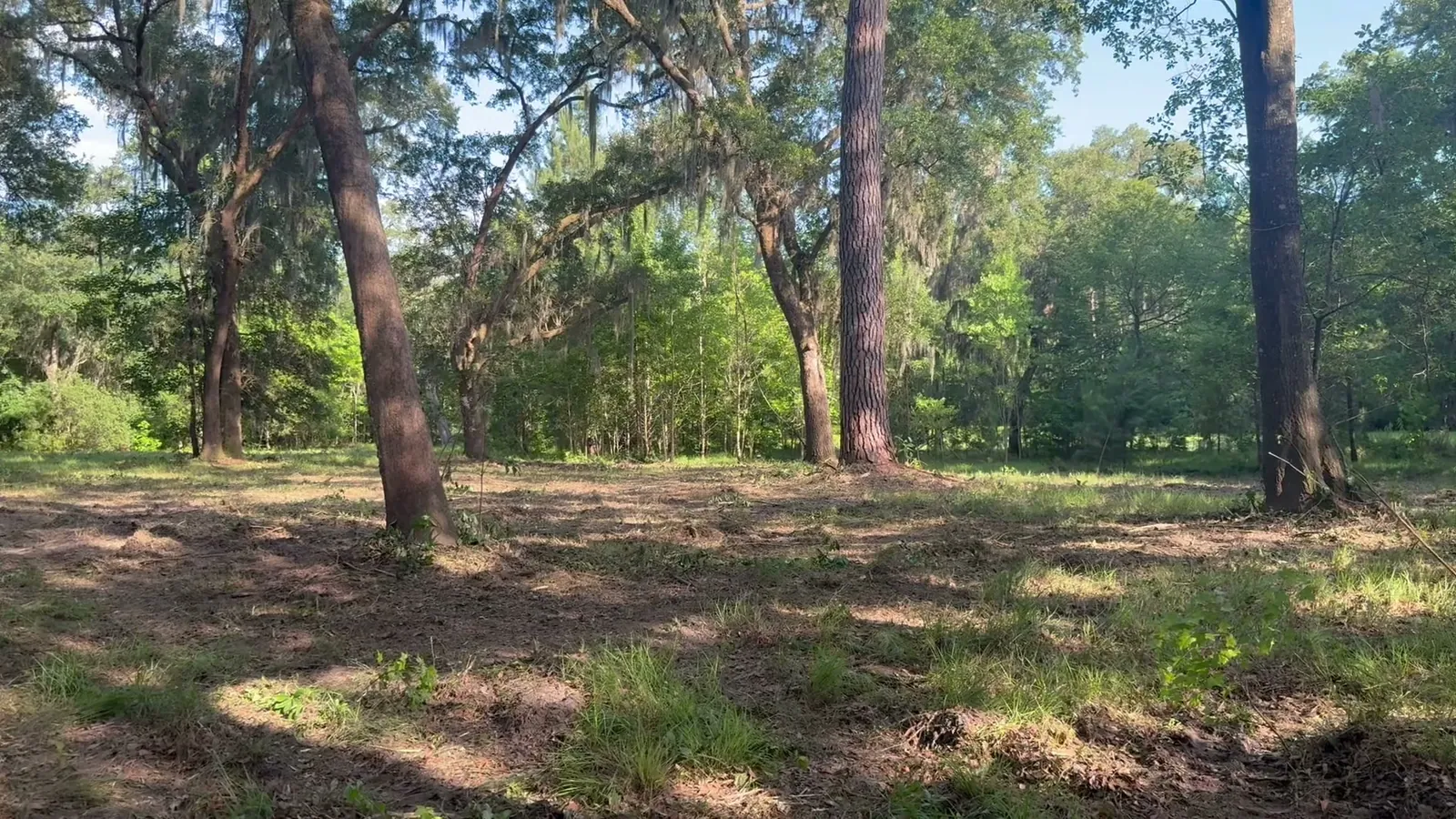
Our forestry mulching runs on a Kubota SVL compact track loader with a mulching head. Brush, saplings, vines and thickets are ground into mulch and left on the ground. The trees you want to keep stay standing.
That flag line marks where our machine stops. The wetland answer itself comes from the Corps, and the marsh answer from BCM.
On dry ground, the job can be lot and homesite clearing or opening up a whole tract. Our family mulches the understory on its own 327-acre tract in the ACE Basin near Yemassee every year. We cover Charleston, Summerville, Walterboro, Beaufort and the rest of the Lowcountry. Call (843) 696-7162 for a free estimate.