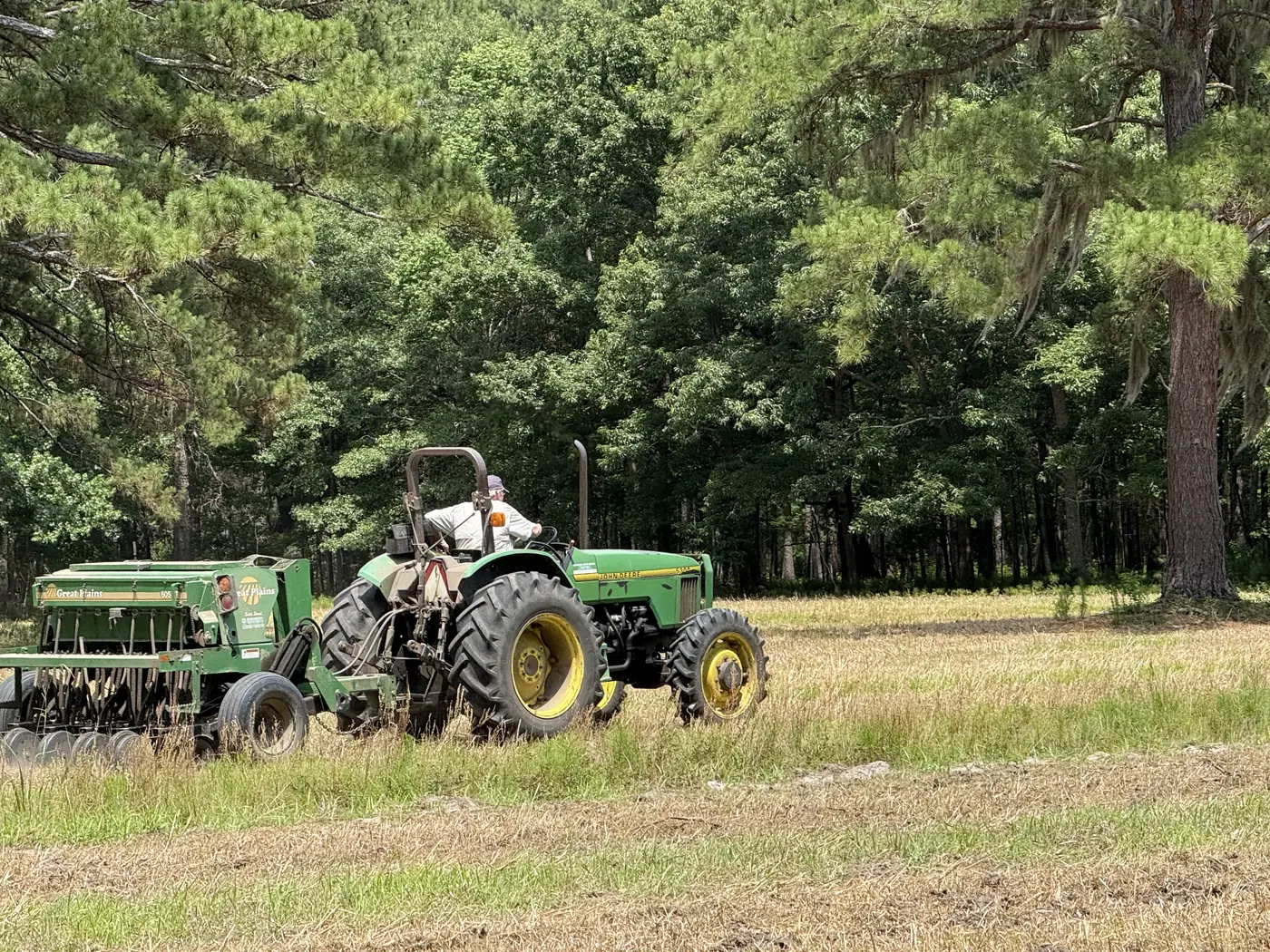
When should you plant food plots in South Carolina?
The fall window is August 15 through October 15 for cereal grains like oats, wheat, and rye, and September 1 through October 15 for clovers, brassicas, and chicory, per the Southeast planting guides. In the Lowcountry, with deer season opening August 15, that makes right now the working season - and soil moisture, not the calendar, should pick your exact day. Rapeseed and the other brassicas get their own dates and rates in our rapeseed and brassica guide for South Carolina.
We plant plots every season on our own family tract in the ACE Basin and drill them for clients across the Lowcountry, so this calendar is the one our own food plot work actually runs on. Here is the honest version of timing, and the two unglamorous factors that beat seed choice every year.
The fall planting windows, by species
| Planting | Southeast window | Notes |
|---|---|---|
| Oats, wheat, rye, triticale | Aug 15 - Oct 15 | Fast tonnage, the fall workhorses |
| Clovers (crimson, arrowleaf, ladino, balansa) | Sept 1 - Oct 15 | Staying power into spring |
| Brassicas, chicory | Sept 1 - Oct 15 | Late-season draw where soil suits |
Two honest notes on using the table. First, plant to moisture inside the window: seed in dry August sand dies at germination, so the smart play is watching the radar and planting ahead of rain, not planting to a date because the bag said so. Second, stagger where you can - an early grain plot catches velvet-season patterns while a late-September clover mix feeds the rut and winter, and a tract with both hunts longer.
The two things that matter more than your seed choice
Extension guidance across the Southeast says the quiet part plainly: plots fail on soil, not seed. Coastal Plains ground runs naturally acidic, and Clemson calls proper liming the single most important practice in plot production, because pH below the 6.0 to 6.5 target locks nutrients away from whatever you plant. The soil test is where every serious plot starts, and it needs to happen early - lime takes months, not days, to move pH.
Depth is the other silent killer. Small seed - the clovers and brassicas - wants a quarter to half inch of cover at most, and burying it deeper is the most common failure in the planting guides. This is exactly why we run a no-till drill: one pass puts seed at its right depth in firm, moist soil, at lower seeding rates than broadcasting, without tearing the plot’s soil structure open to dry out. It is the same tool we use at home, for the same reason.
Fitting plots into a Lowcountry season that starts in August
South Carolina’s private-land season in the Lowcountry zones opens August 15 and runs to January 1 - one of the longest deer seasons anywhere - so the plot program here is a relay, not a single planting. Early grain plots work the front of the season. September plantings come into strength for October and the rut. Clover carries late season and greens first in spring, feeding the herd when the woods are barest.
The plots also only matter if deer can reach them and you can hunt them, which is why plot work on our jobs travels with lanes and access and stand-line thinking - the full hunting land program, sequenced the way we run our own ground: access, food, finish.
Getting plots in the ground this season
If your tract’s plots are not planned yet, the window is open but moving. We site plots where deer already travel, test and amend the soil honestly, and drill to the calendar above - and we will tell you plainly which ground on your tract will grow and which is not worth the seed. Call or text (843) 696-7162 or start at the contact page. Season opens fast; the plots that feed it get planted now.