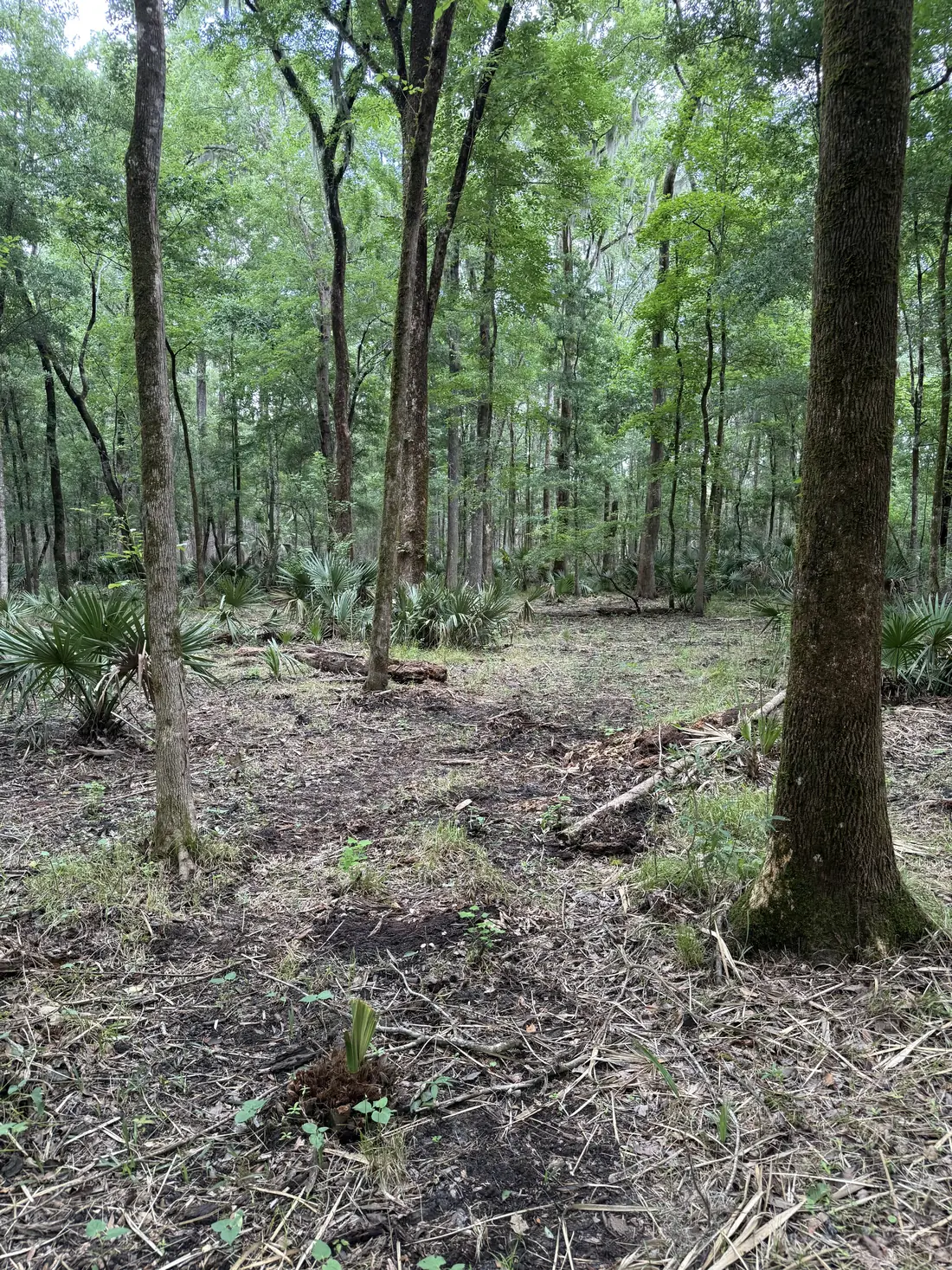
Does understory clearing improve deer and turkey habitat?
Yes - when it is selective. Opening a choked understory puts sunlight on the forest floor, and the low, tender regrowth that follows is precisely the browse deer live on. The same work restores the sightlines and open travel that turkeys favor. The rule is mosaic, not moonscape: open the right zones, keep the cover, and the woods both hunt and hold game better.
This is the work we practice on our own 327 acres in the Basin every year, and understory clearing for hunting tracts is the heart of what clients hire us for. Here is what actually improves habitat, what damages it, and how the good version gets planned.
What opening the understory changes
A closed understory - myrtle, sweetgum, privet, vine - shades out the forest floor and freezes it. Nothing tender grows at deer height, sightlines die at ten feet, and game moves through in tunnels you cannot hunt. Grinding the right zones flips the switch: sun reaches soil, and the browse response - the fresh sprout growth state wildlife guidance ranks among preferred deer foods - starts the first growing season. The chip layer feeds the ground instead of smothering it, and the woods take on the open, park-like structure that lets you see game, move quietly, and hang stands where the travel actually happens.
Turkeys vote the same way. Open understory with scattered cover is strut-and-feed country; solid thicket is neither.
What must stay: the parts that make a tract hold game
| Keep | Why it matters |
|---|---|
| Mast trees - the oaks above all | Acorns are the fall economy; state guidance treats hard mast as a top-priority food |
| Bedding thickets | Deer need somewhere thick to be; take it all and they will bed on the neighbor |
| Brushy field edges and travel screens | Key cover in wildlife guidance - including where does tuck fawns |
| Evergreen and swamp-edge cover | Winter shelter in the Lowcountry pattern |
| The wet bottoms | They are the richest ground on the tract; work their margins, not their middles |
The failure mode we get called to look at is the over-cleared tract: understory taken wall to wall, cover gone, and the owner wondering where the deer went. They went where the cover is. The fix is patience and pattern - regrowth managed into a mosaic rather than fought - and it is far cheaper to plan the mosaic from the start.
The pattern that works: zones, corridors, and edges
Good understory work reads like a hunting plan because it is one. Stand corridors and shooting lanes get opened where wind and access already favor the hunter. Plot approaches get thinned so deer commit comfortably in daylight - which is why this work travels with the food plot program. Oak flats and bottoms get their floors cleaned so mast is findable and huntable. And between the openings, the thick stays thick on purpose.
Timing rides the wildlife calendar: by late summer fawns are up and moving, which opens the window we use most - late summer through winter - and lets the work shape the tract right as the Lowcountry’s long season arrives. On our own ground the understory rotation is an every-year rhythm, a stand or two at a time, and that cadence is what we write into client plans as part of the full hunting land management program: access, food, finish.
Getting your woods opened the right way
The walk-through is where the plan gets made: which zones earn openings this season, which cover is load-bearing, where the lanes and approaches belong. It is free, it is written down, and every recommendation in it has been tested on family ground one county over. Call or text (843) 696-7162 or start at the contact page - and if the season opening August 15 is your deadline, say so, because it is ours too.