How much does lot clearing cost in the Charleston area?
Residential lot clearing in the Lowcountry prices as a flat job, and published guides put typical half-acre work around $1,000 to $1,400 and up, with density deciding the rest. A thin understory lot sits at the bottom of the range; a myrtle-and-sweetgum wall that has closed solid for a decade climbs well past it.
Lots are half our calls, from West Ashley infill to Bluffton homesites, so lot clearing has its own page and now its own honest price guide. Here is how the number actually gets made.
Why lots price differently than acreage
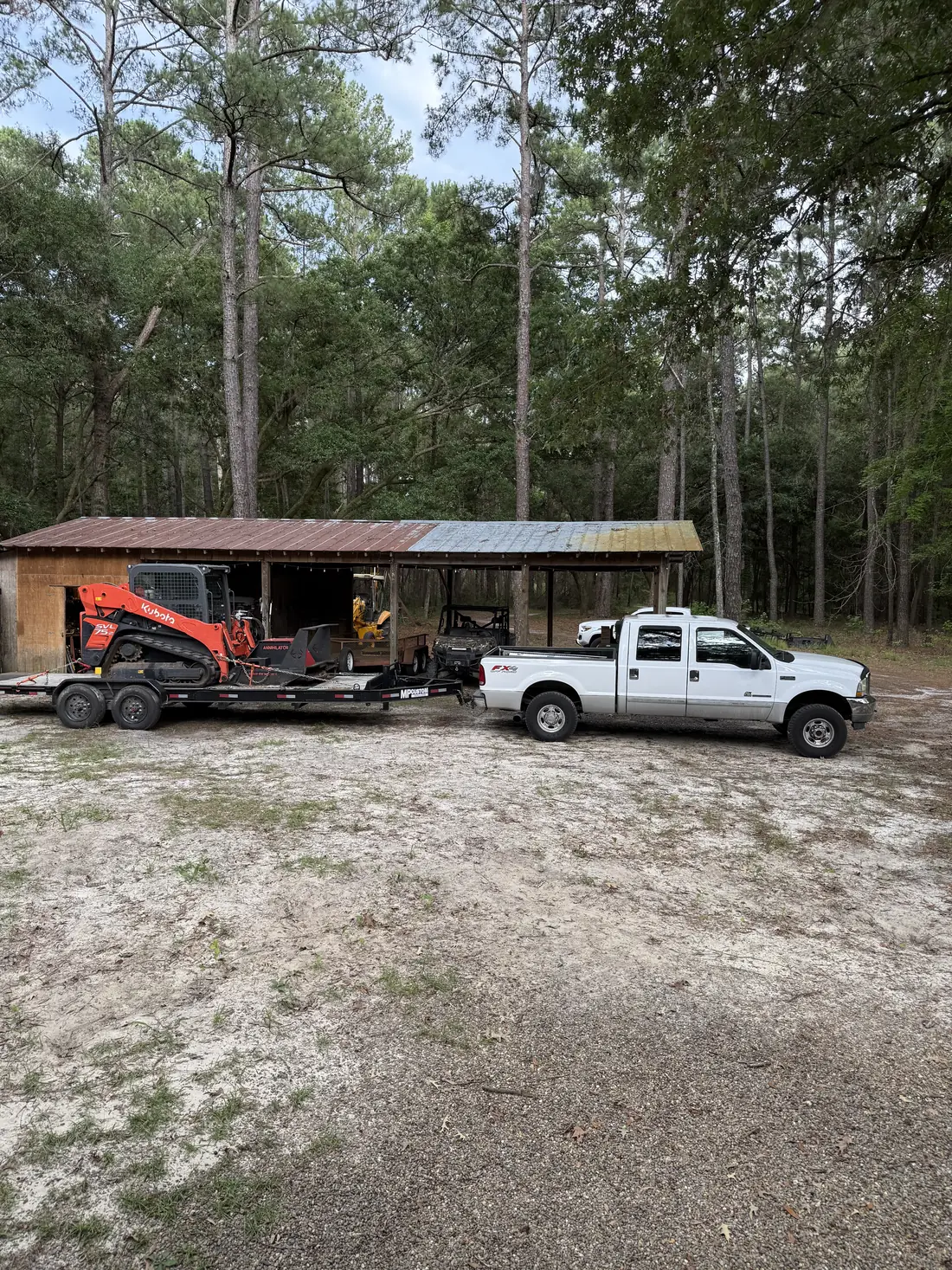
The economics of a small job are mobilization economics. Loading, hauling, unloading, and staging cost the same whether the machine then grinds for two hours or eight, so a lot carries a job minimum and prices as a whole. Per-acre arithmetic - a quarter of some per-acre rate - reliably underestimates real quotes and makes honest bids look expensive next to fantasy math.
| What you are pricing | The honest form of the number |
|---|---|
| Quarter- to full-acre homesite | Flat job quote, walk-through based |
| Density and stem size | The main driver inside the quote |
| Access (gates, neighbors, streets) | Second driver, especially on infill |
| Keepers to work around | Standard practice, flagged at the walk |
| Finish (survey-ready, chips, raking) | Stated in writing so bids compare |
What Lowcountry lots do to the number
Growth here compounds fast. A lot that sat five years is not five times messier than a one-year lot - it is a different category, with woody stems, vine mats, and volunteer pine that turn mowing-grade work into real grinding. Buyers regularly walk parcels they cannot enter; we regularly clear lots whose owners see their own back corner for the first time in years.
The second Lowcountry factor is the canopy. On Johns Island, in Old Town Bluffton’s orbit, across most of Charleston’s leafy edges, the live oaks are the value, and clearing that flattens them is vandalism with an invoice. Our default is selective: understory ground in place, keepers flagged and worked around outside their roots, and the lot left shaded, open, and looking like the Lowcountry. That is standard practice in every forestry mulching-based lot job we do, not a premium add-on.
What the cleared lot is ready for, honestly
A mulched lot is ready to survey, stake, list, and plan - open ground under kept trees, with the debris returned as a chip layer instead of piled or burned. What it is not is a building pad: grading, fill, and rooted-out footprints are excavation-trade work, and we say so plainly rather than selling adjacent to our lane. Builders like taking lots from where we leave them, because clean cleared ground makes their own bid sharper.
If the lot is headed for market instead of a build, the math usually gets better: cleared lots photograph like property instead of thicket, walk like an asset instead of a liability, and show buyers their actual boundaries.
Getting a real number for your lot
Send the address and a couple of photos, or let us walk it - the estimate is written, specific, and free, and it states the keepers, the finish, and the date. Most lots run one to two machine days. Call or text (843) 696-7162, or start at the contact page.
And if what you actually have is acreage rather than a lot, start with the land clearing cost guide - the math changes shape as the ground gets bigger.